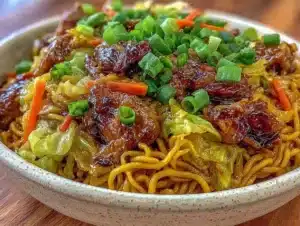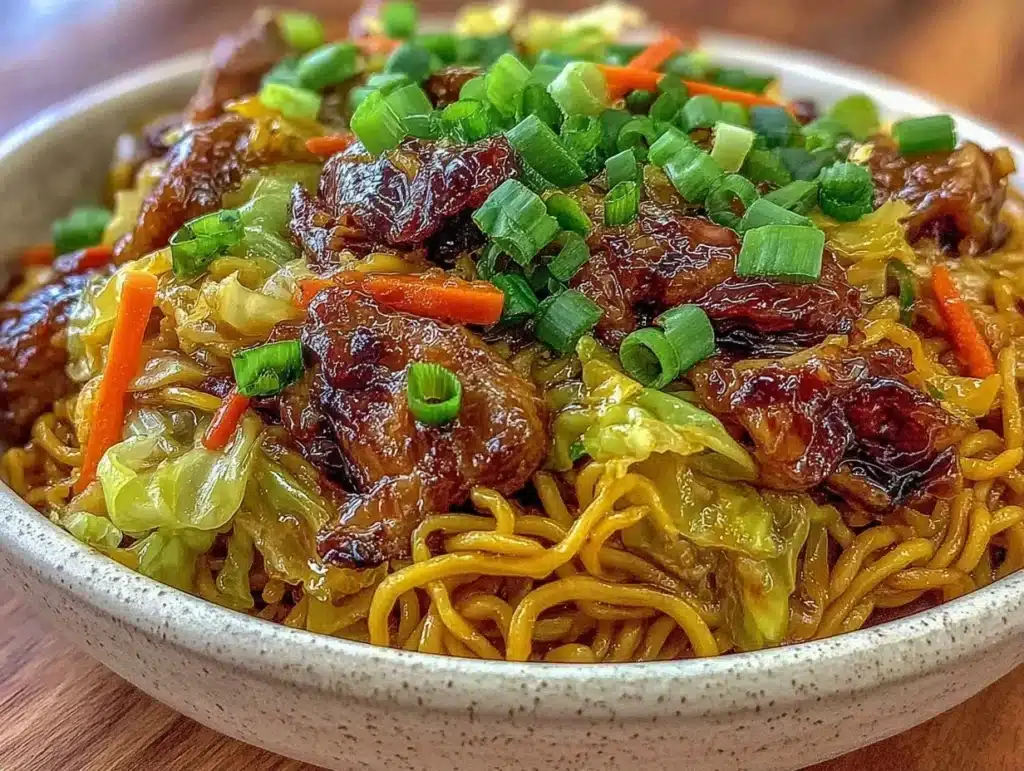
Let’s be honest for a second. The meat aisle at the grocery store is a trap. It’s designed to make you feel like you need the most expensive, marbled, perfectly trimmed piece of protein to cook a good meal. But if you know the tricks, you know that’s total nonsense. I found myself standing there last Tuesday, staring at a mountain of boneless, skinless chicken breasts that cost a fortune per pound, while the real deal sat quietly in the corner. Chicken thighs. Specifically, those dark meat thighs that are often discounted because people think they’re “fancy” or “messy.” Spoiler alert: they’re not. They’re the unsung heroes of budget cooking, and they are absolutely perfect for a quick weeknight dinner.
I first started swapping out chicken breasts for thighs in my stir-fries about three years ago. At first, I was skeptical. I thought I’d lose that clean, lean vibe I was used to. But after the first bite of crispy, golden chicken chow mein, I realized I had been missing out on so much flavor. The dark meat stays juicy even when you crank up the heat. It doesn’t dry out. It crisps up beautifully. And honestly, it saves me about $4 every time I shop. That’s money I can spend on good soy sauce or fresh veggies, which is where the real magic happens.
This recipe for Crispy Chicken Chow Mein is my go-to when I need dinner on the table in 20 minutes, but I don’t want to feel like I’m eating “cheap” food. It’s not cheap because it’s low effort. It’s cheap because I’m using my wits. I’m using a cut of meat that is overlooked by the fancy crowd but loved by anyone who actually cares about taste. If you’re tired of rubbery, dry chicken and want a meal that feels indulgent but costs pennies to make, you’re in the right place. Let’s talk about how to make this happen.
Why You’ll Love This Recipe
There is a specific kind of joy in making a dish that looks like it came from a takeout menu but actually costs less to make at home. This crispy chicken chow mein hits that sweet spot. It’s not just about saving money, though. It’s about the texture. You know that frustration when you bite into stir-fry chicken and it’s tough? Yeah, we’re avoiding that here. By using chicken thighs and a specific marinating trick, you get a tender interior with a crust that shatters when you bite into it. It’s the kind of meal that makes you close your eyes and sigh because it’s just that good.
Here is why this recipe is going to become a staple in your weekly rotation:
- Quick & Easy: From start to finish, this takes about 20-25 minutes. That’s faster than waiting for a delivery driver. It’s perfect for those nights when you’re exhausted and just want to sit down.
- Simple Ingredients: You probably already have most of this in your kitchen. Soy sauce, garlic, ginger, noodles, and chicken thighs. No fancy grocery trips needed. No obscure spices you’ll only use once.
- Perfect for Busy Weeknights: This is the ultimate “I forgot to defrost dinner” savior. Chicken thighs thaw fast, and the cooking process is rapid-fire.
- Crowd-Pleaser: Kids love the crispy chicken. Adults love the savory sauce. It’s a win-win that rarely fails. Even picky eaters usually ask for seconds.
- Unbelievably Delicious: The combination of crispy chicken, soft noodles, and that sticky-sweet-salty sauce is next-level comfort food. It’s soul-soothing in a bowl.
- Budget-Friendly Hack: This is the key. By choosing chicken thighs over breasts, you’re stretching your grocery budget without sacrificing quality. It’s resourceful cooking at its finest.
What makes this different from the rest? It’s the marination. I use a little bit of baking soda in the marinade. It sounds weird, I know. But it breaks down the protein fibers just enough to keep the dark meat incredibly tender, even if you overcook it slightly (which happens to the best of us). Plus, the high heat sear creates that restaurant-style crust. It’s not just another chicken recipe. It’s your best version of takeout, made in your own kitchen.
What Ingredients You Will Need
This recipe relies on simple, wholesome ingredients to deliver bold flavor and satisfying texture without the fuss. The beauty of chow mein is its flexibility. You can use whatever veggies you have lying around in the crisper drawer. The base is straightforward, but the quality of your soy sauce and the cut of your chicken matter more than you think. I prefer to buy fresh noodles if I can find them, but dried ones work just fine if you rinse them well.
Here is what you’ll need to get started:
- Chicken Thighs (Boneless, Skinless): 1.5 lbs. Look for firm, plump thighs. Avoid the ones that look mushy or overly pale. Dark meat is essential for this recipe because it stays juicy. I recommend buying the family pack and portioning it out yourself to save even more.
- Chinese Stir-Fry Noodles: 8 oz. Fresh egg noodles or dried wheat noodles work best. Avoid instant ramen noodles unless you’re in a real pinch, as they don’t have the same chew. If you need a gluten-free option, rice noodles are a great substitute.
- Soy Sauce: 3 tablespoons. I use low-sodium soy sauce so I can control the salt level. Kikkoman is a reliable brand, but any standard brand works. Avoid the “seasoned” soy sauces with sugar added, as you’ll be adding your own sweetener.
- Dark Soy Sauce: 1 tablespoon. This is for color and a deeper, molasses-like flavor. If you don’t have it, regular soy sauce is fine, but the dish won’t have that rich, dark hue. It’s worth keeping in your pantry.
- Oyster Sauce: 2 tablespoons. This adds that umami depth that makes stir-fry taste like restaurant food. If you’re vegetarian, you can skip this or use mushroom sauce, but it changes the flavor profile slightly.
- Sesame Oil: 1 teaspoon. Use toasted sesame oil for the finish. Don’t use the raw kind for cooking; it burns easily. The toasted kind is potent, so a little goes a long way.
- Garlic: 3 cloves, minced. Fresh garlic is non-negotiable. Powdered garlic just doesn’t hit the same way in a quick stir-fry.
- Fresh Ginger: 1 teaspoon, grated. Again, fresh is best. If you must use powdered, use 1/4 teaspoon, but the fresh zest makes a huge difference.
- Cabbage: 2 cups, shredded. Green cabbage holds up best in the wok. It adds crunch and volume without adding many calories. It’s a cheap filler that makes the meal feel substantial.
- Green Onions: 3 stalks, chopped. Use the white parts for cooking and the green parts for garnish. They add a fresh, oniony bite that cuts through the richness.
- Vegetable Oil: 2 tablespoons. For frying the chicken. Any neutral oil with a high smoke point works. Canola or avocado oil are good choices.
- Cornstarch: 1 tablespoon. This helps thicken the sauce and gives the chicken a slight coating for crispiness.
- Sugar: 1 teaspoon. Just a pinch to balance the saltiness of the soy and oyster sauces. Brown sugar works too if you want a deeper flavor.
- White Pepper: 1/4 teaspoon. This adds a subtle heat that black pepper doesn’t provide. It’s a classic Chinese cooking spice. If you don’t have it, skip it, but you’ll miss a little bit of that authentic taste.
Why Chicken Thighs Are the Secret Weapon
I know what you’re thinking. “But chicken breasts are leaner!” Yes, they are. But leaner doesn’t mean tastier. Chicken thighs have a higher fat content, which means they stay moist during high-heat cooking. When you stir-fry, the heat is intense and fast. Breasts dry out in seconds. Thighs? They barely notice. Plus, they’re usually half the price per pound. It’s a no-brainer for the savvy cook.
Equipment Needed
You don’t need a fancy kitchen to make this. A large skillet or, even better, a wok is all you need. A wok is ideal because its shape allows you to toss the ingredients quickly and evenly. But if you don’t have one, a large non-stick skillet works perfectly. You also need a sharp knife. Dull knives are dangerous and make prep a nightmare. Keep it sharp.
I also recommend having a pair of chopsticks or a silicone spatula for stirring. Tongs are helpful for flipping the chicken. And don’t forget a small bowl for mixing your sauce beforehand. This is crucial. You don’t want to be fumbling for bottles while your chicken is burning. Measure everything out before you start cooking. It’s called “mise en place,” and it will save your dinner.
If you’re using a gas stove, a wok is great. If you’re on electric, a heavy-bottomed skillet might conduct heat better. Just make sure your pan is big enough to hold all the ingredients without crowding. Crowding leads to steaming, not frying. And we want crispy, not soggy. Finally, have a pair of tongs ready for handling the hot chicken. It’s safer and cleaner than using a fork.
Preparation Method
Let’s get cooking. This part is straightforward, but timing is everything. Follow these steps closely for the best results.
Step 1: Prep the Chicken (5 minutes)
First, pat the chicken thighs dry with paper towels. Moisture is the enemy of crispiness. If the chicken is wet, it will steam instead of sear. Cut the thighs into bite-sized pieces, about 1-inch chunks. In a bowl, combine the chicken with 1 tablespoon of soy sauce, 1 teaspoon of cornstarch, and a pinch of baking soda (about 1/4 teaspoon). Mix it well. The baking soda helps tenderize the meat. Let it sit while you prep the veggies. This marination step is where the magic happens.
Step 2: Cook the Noodles (5 minutes)
While the chicken marinates, cook your noodles according to the package instructions. If using fresh noodles, just blanch them in boiling water for 1-2 minutes. If using dried noodles, cook until al dente. Once cooked, rinse them under cold water to stop the cooking process and remove excess starch. Toss them with a little bit of sesame oil to prevent sticking. Set them aside. You don’t want them getting mushy while you wait.
Step 3: Make the Sauce (2 minutes)
In a small bowl, whisk together the remaining soy sauce, dark soy sauce, oyster sauce, sugar, white pepper, and 2 tablespoons of water. Stir until the sugar is dissolved. Set this aside. Having the sauce ready means you won’t panic when the pan is hot.
Step 4: Sear the Chicken (5-7 minutes)
Heat your wok or skillet over medium-high heat. Add the vegetable oil. Once the oil is shimmering but not smoking, add the chicken pieces in a single layer. Do not overcrowd the pan. Cook in batches if necessary. Let the chicken sit for 2 minutes without moving it. This creates a golden, crispy crust. Then, flip and cook for another 2-3 minutes until the chicken is cooked through and crispy. Remove the chicken from the pan and set it aside on a plate. Don’t clean the pan yet; that chicken flavor is gold.
Step 5: Stir-Fry the Veggies (3 minutes)
In the same pan, add a little more oil if needed. Toss in the garlic and ginger. Stir for 30 seconds until fragrant. Add the shredded cabbage and green onions (white parts). Stir-fry for 2 minutes. You want the cabbage to wilt slightly but still have some crunch. It should be bright green and tender-crisp.
Step 6: Combine and Finish (3 minutes)
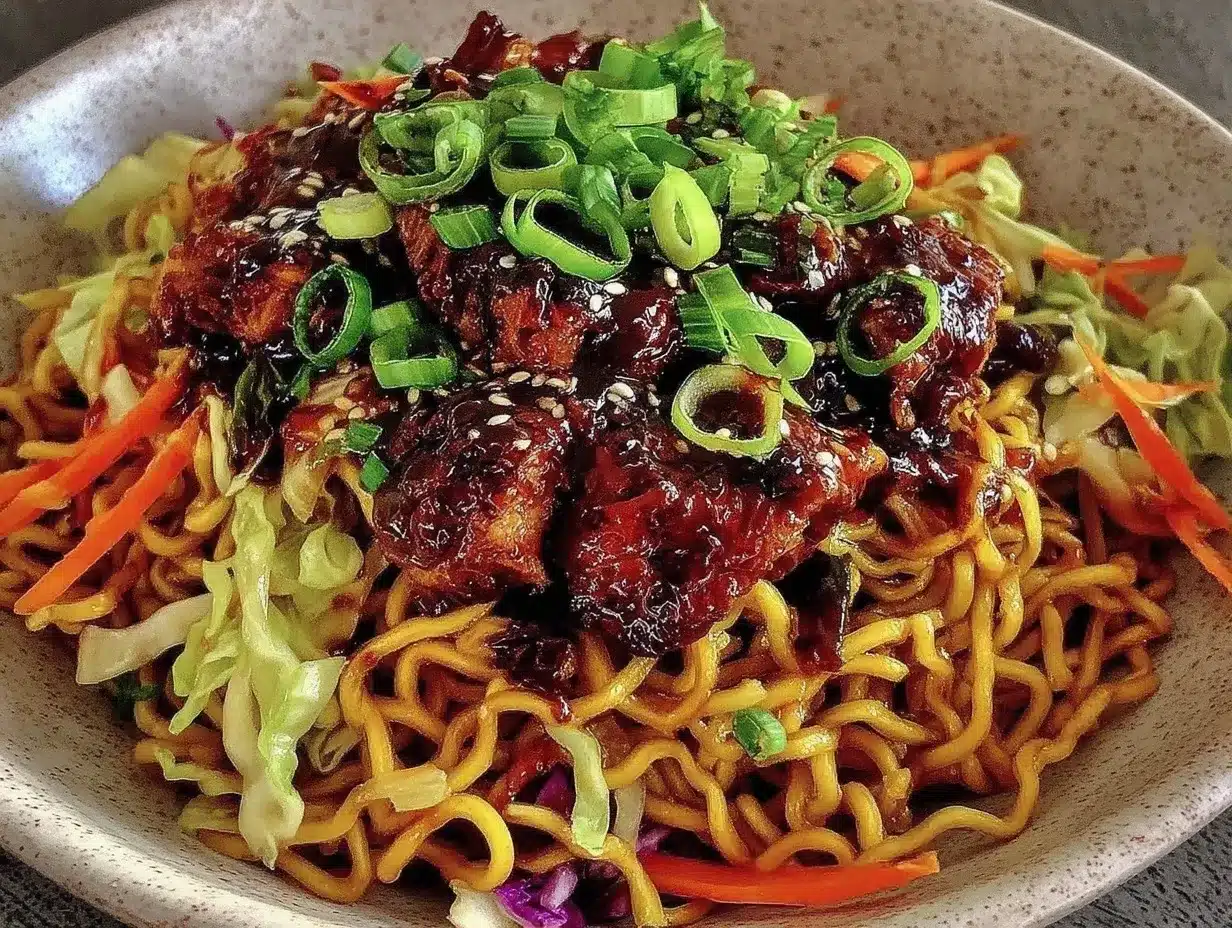
Return the crispy chicken to the pan. Add the cooked noodles. Pour the sauce over everything. Toss everything together quickly. The sauce will thicken and coat the noodles and chicken. Cook for another minute to heat everything through. Taste and adjust seasoning if needed. Add a drizzle of sesame oil at the very end for aroma. Serve immediately, topped with the green parts of the green onions.
Cooking Tips & Techniques
I’ve made this recipe so many times that I’ve learned a few hard lessons. The biggest mistake people make is overcrowding the pan. When you put too much chicken in at once, the temperature of the pan drops. The chicken releases water, and instead of frying, it boils in its own juices. You end up with gray, soggy chicken. Trust me, I’ve been there. It’s not fun. The solution? Cook in batches. It takes an extra minute, but the result is worth it.
Another tip: high heat is your friend. You want the pan to be hot before you add the oil. If you’re using a gas stove, you can even tilt the pan to get a little flame contact, but be careful. If you’re on electric, max it out. The high heat sears the outside quickly, locking in the juices. It’s the secret to that restaurant texture.
Also, don’t skip the cornstarch in the marinade. It creates a tiny barrier on the chicken that helps it crisp up and keeps the marinade attached. It’s a simple step that makes a huge difference. And finally, taste as you go. Sauces vary in saltiness. If your soy sauce is extra salty, add a splash of water. If it’s bland, add a pinch more salt. Your palate is the best tool you have.
Variations & Adaptations
One of the best things about chow mein is how adaptable it is. Here are a few ways to tweak this recipe to suit your needs.
Vegetarian Version: Swap the chicken for extra firm tofu. Press the tofu first to remove moisture, then cube it and fry it until crispy. The rest of the recipe stays the same. You can even add more veggies like broccoli or bell peppers.
Gluten-Free Option: Use rice noodles instead of wheat noodles. Make sure your soy sauce is tamari (gluten-free soy sauce) and use a gluten-free oyster sauce or mushroom sauce. It’s just as delicious and easy to make.
Spicy Kick: Add a teaspoon of chili garlic sauce or a dash of sriracha to the sauce mixture. If you like heat, add some sliced fresh chilies with the garlic. It adds a nice burn that contrasts with the sweet sauce.
Protein Swap: You can use shrimp or beef strips instead of chicken. Shrimp cooks very quickly, so add it at the end just to warm through. Beef takes a bit longer, so marinate it in cornstarch and cook it like the chicken.
I once tried this with leftover roast chicken. It wasn’t as crispy, but it was still tasty. It’s a good way to use up leftovers. Just add the chicken at the very end to warm it through, since it’s already cooked.
Serving & Storage Suggestions
This dish is best served hot, straight from the pan. I like to serve it in large bowls so the noodles don’t get cramped. Garnish with extra green onions and maybe some crushed peanuts or sesame seeds for added texture. A side of hot and sour soup or egg drop soup makes for a complete meal. I also like to have a cold beer or a glass of iced tea with it. It cuts through the richness perfectly.
If you have leftovers (which I doubt), store them in an airtight container in the fridge for up to 3 days. The noodles might get a bit soft, but they’re still good. To reheat, use a skillet with a little bit of water to steam them back to life. Don’t use the microwave if you can help it; it makes the noodles rubbery. If you do use the microwave, add a splash of water and cover it.
You can also freeze this, but the texture of the noodles changes after freezing. It’s better to freeze the chicken and veggies separately from the noodles. Thaw and reheat separately, then toss together. It’s not ideal, but it works in a pinch.
Nutritional Information & Benefits
While this isn’t a diet food, it’s actually pretty balanced. Chicken thighs provide protein and healthy fats. The noodles give you carbohydrates for energy. The cabbage adds fiber and vitamins. It’s a complete meal in one bowl. One serving (about 1.5 cups) has approximately 550 calories, 30g of protein, 50g of carbs, and 20g of fat. These numbers vary based on the noodles and sauce used, so check your specific ingredients.
The use of chicken thighs means you’re getting more iron and zinc than with breasts. It’s a more nutrient-dense choice. Plus, by cooking at home, you control the sodium and sugar levels. Takeout chow mein can be loaded with salt. This version lets you taste the food without the sodium overload. It’s a healthier way to enjoy comfort food.
Conclusion
So there you have it. Crispy Chicken Chow Mein that’s quick, cheap, and incredibly delicious. I hope you try this recipe and see why I’m so obsessed with chicken thighs. They are the secret to a great stir-fry. Don’t let anyone tell you they’re “too fatty” or “too complicated.” They are the best part of the chicken. And when you combine them with crispy noodles and a savory sauce, you get a meal that feels like a treat but fits your budget.
Feel free to customize it. Add more veggies, change the sauce, or swap the protein. This recipe is a framework, not a rulebook. Cook it your way. And when you do, let me know how it turned out. I love hearing from you. Leave a comment below with your tips or variations. Share this recipe with a friend who needs a quick dinner idea. Happy cooking!
Frequently Asked Questions
Can I use chicken breasts instead of thighs?
Yes, you can, but the chicken will be less juicy and more prone to drying out. If you use breasts, reduce the cooking time slightly and be careful not to overcook them. Thighs are recommended for the best texture.
What kind of noodles are best for chow mein?
Fresh egg noodles are the traditional choice and provide the best chew. Dried wheat noodles are a good alternative. Avoid instant ramen noodles as they are too thin and break easily. Rice noodles work for a gluten-free option.
How do I make the chicken extra crispy?
Pat the chicken dry before marinating. Use a high heat and don’t overcrowd the pan. Let the chicken sit undisturbed for a few minutes to form a crust before flipping. Cornstarch in the marinade also helps with crispiness.
Can I make this ahead of time?
You can prep the ingredients ahead of time, but it’s best to cook the noodles and stir-fry the chicken just before serving. The noodles can get soggy if they sit in the sauce for too long. You can store the sauce and prepped veggies in the fridge for a day.
Is this recipe spicy?
The base recipe is not spicy. It’s savory and slightly sweet. If you want heat, add chili flakes, sriracha, or fresh chilies. You can control the spice level to your preference.
Pin This Recipe!
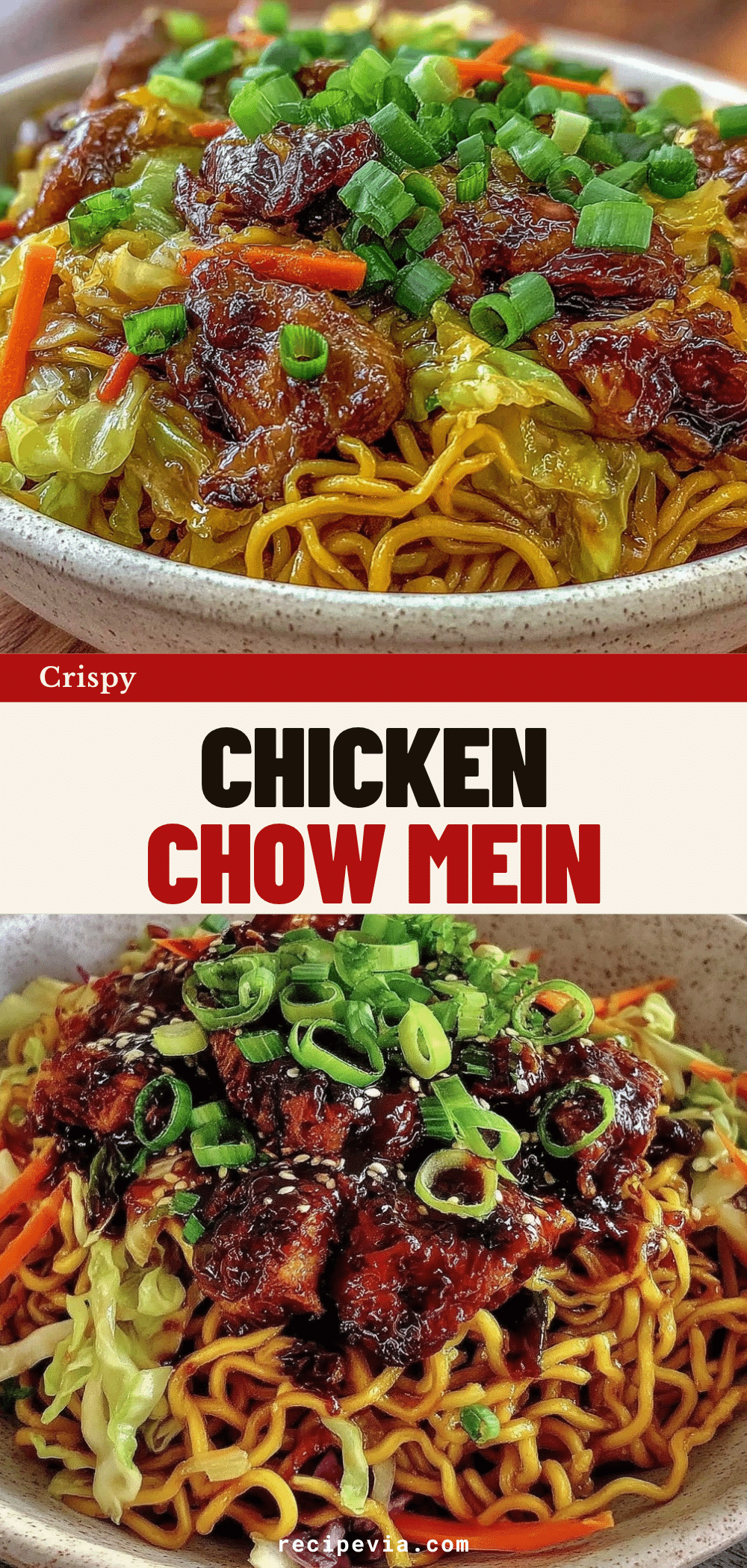
Crispy Chicken Chow Mein: 5 Cheap Cut Hack
- Total Time: 25 minutes
- Yield: 4 servings 1x
Description
A quick, budget-friendly weeknight dinner featuring juicy, crispy chicken thighs and savory noodles in a sticky-sweet-salty sauce, ready in under 25 minutes.
Ingredients
- 1.5 lbs boneless, skinless chicken thighs
- 8 oz Chinese stir-fry noodles (fresh egg or dried wheat)
- 3 tablespoons low-sodium soy sauce
- 1 tablespoon dark soy sauce
- 2 tablespoons oyster sauce
- 1 teaspoon toasted sesame oil
- 3 cloves garlic, minced
- 1 teaspoon fresh ginger, grated
- 2 cups green cabbage, shredded
- 3 stalks green onions, chopped
- 2 tablespoons vegetable oil
- 1 tablespoon cornstarch
- 1 teaspoon sugar
- 1/4 teaspoon white pepper
- 1/4 teaspoon baking soda
- 2 tablespoons water
Instructions
- Pat chicken thighs dry and cut into 1-inch chunks. In a bowl, combine chicken with 1 tablespoon soy sauce, 1 teaspoon cornstarch, and 1/4 teaspoon baking soda. Mix well and let marinate while prepping other ingredients.
- Cook noodles according to package instructions. If using fresh noodles, blanch for 1-2 minutes; if dried, cook until al dente. Rinse under cold water to stop cooking and remove starch. Toss with a little sesame oil to prevent sticking and set aside.
- In a small bowl, whisk together remaining soy sauce, dark soy sauce, oyster sauce, sugar, white pepper, and 2 tablespoons water until sugar is dissolved. Set aside.
- Heat a wok or large skillet over medium-high heat. Add vegetable oil. Once shimmering, add chicken pieces in a single layer (cook in batches if necessary to avoid overcrowding). Let sit undisturbed for 2 minutes to form a crust, then flip and cook for 2-3 minutes until cooked through and crispy. Remove chicken and set aside.
- In the same pan, add a little more oil if needed. Add garlic and ginger, stirring for 30 seconds until fragrant. Add shredded cabbage and white parts of green onions, stir-frying for 2 minutes until cabbage is wilted but still crisp.
- Return crispy chicken to the pan. Add cooked noodles and pour the sauce over everything. Toss quickly to coat. Cook for another minute to heat through. Drizzle with remaining sesame oil, taste and adjust seasoning, then serve immediately topped with green onion greens.
Notes
Pat chicken dry before cooking to ensure crispiness. Do not overcrowd the pan, or the chicken will steam instead of fry. Cook in batches if necessary. High heat is essential for the restaurant-style crust. If using chicken breasts, reduce cooking time to prevent drying out. For a vegetarian version, swap chicken for extra firm tofu. For gluten-free, use rice noodles and tamari.
- Prep Time: 10 minutes
- Cook Time: 15 minutes
- Category: Main Course
- Cuisine: Chinese
Nutrition
- Serving Size: 1.5 cups
- Calories: 550
- Sugar: 6
- Sodium: 800
- Fat: 20
- Saturated Fat: 5
- Carbohydrates: 50
- Fiber: 2
- Protein: 30
Keywords: chicken chow mein, crispy chicken, budget dinner, weeknight meals, stir fry, chicken thighs, quick dinner, cheap cut hack