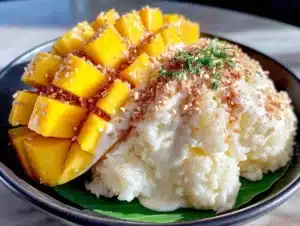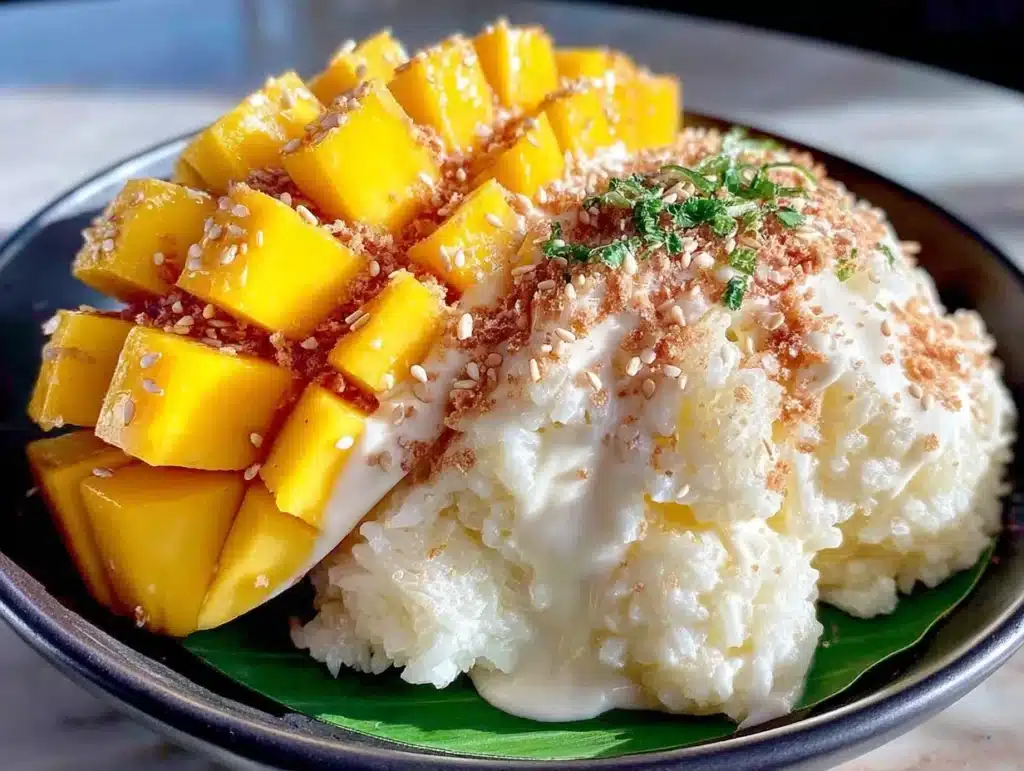
The smell of toasted sesame seeds mixing with warm coconut milk hits you before you even see the dish. It’s a scent that instantly transports me back to a humid street market in Bangkok, where the air was thick with jasmine and sugar. I remember standing there, watching a vendor fold the glistening rice with practiced ease, my wallet heavy with just enough baht for one perfect serving. That single bite of Classic Mango Sticky Rice wasn’t just dessert; it was a moment of pure, unadulterated joy that cost less than my morning coffee back home.
Honestly, I’ve tried to recreate that magic in my kitchen dozens of times. At first, I thought I needed imported Thai ingredients from three different specialty stores. I was wrong. After testing this recipe over a dozen times, I realized the secret isn’t expensive imports—it’s technique and timing. This version of Classic Mango Sticky Rice is designed around whatever mangoes are on sale that week. It’s resourceful, budget-friendly, and tastes like a vacation.
Let’s face it, most people think Thai desserts are complicated or pricey. They imagine a trip to an Asian supermarket to find obscure spices. But the truth is, you only need four main ingredients. This dish is perfect for busy weeknights when you want something sweet but not heavy. It’s also great for impressing guests without breaking the bank or spending hours in the kitchen. As someone who loves stretching a grocery budget, I’m proud to share this version. It’s simple, it’s affordable, and it’s absolutely delicious.
Why You’ll Love This Recipe
There is a specific kind of comfort in eating Classic Mango Sticky Rice that no other dessert can quite match. It’s not just about the sugar rush; it’s about the texture contrast and the way the flavors balance each other out. I’ve spent years cooking Thai food at home, and this dish remains my go-to when I want to feel like a pro without the stress. Here is why this recipe stands out from the rest:
- Quick & Easy: While the rice needs to soak, the actual active time is under 30 minutes. It’s perfect for busy weeknights or last-minute cravings when you want something special.
- Simple Ingredients: No fancy grocery trips needed. You likely already have sticky rice, coconut milk, and sugar in your pantry or can get them at any standard supermarket.
- Perfect for Summer: This is the ultimate summer dessert. It’s refreshing, cool, and pairs beautifully with sunny days or hot afternoons.
- Crowd-Pleaser: Kids and adults alike love the chewy texture of the rice and the sweetness of the mango. It’s always a hit at potlucks or family dinners.
- Unbelievably Delicious: The combination of salty-sweet coconut sauce with tart-sweet mango is next-level comfort food. It’s the kind of dish that makes you close your eyes after the first bite.
What makes this recipe different is the attention to detail in the rice preparation. Many recipes skip the soaking step or use the wrong rice type, resulting in a mushy mess. By using the correct short-grain sticky rice and proper steaming techniques, you get that authentic chewiness. It’s comfort food reimagined—healthier than a cake, faster than a soufflé, but with the same soul-soothing satisfaction. Plus, it’s incredibly budget-friendly, making it perfect for impressing guests without stress.
What Ingredients You Will Need
This recipe uses simple, wholesome ingredients to deliver bold flavor and satisfying texture without the fuss. The beauty of Classic Mango Sticky Rice lies in its minimalism. You don’t need a dozen items; you need the right four. I recommend buying your ingredients in bulk to save money, as these staples last a long time in your pantry.
For the Sticky Rice
- Thai Sticky Rice (Glutinous Rice): 1 cup (200g). This is non-negotiable. Look for the small, opaque grains. I prefer buying from Asian markets where the turnover is high, ensuring freshness.
- Water: For soaking. Use filtered water if you have it, though tap water works fine for soaking.
For the Coconut Sauce
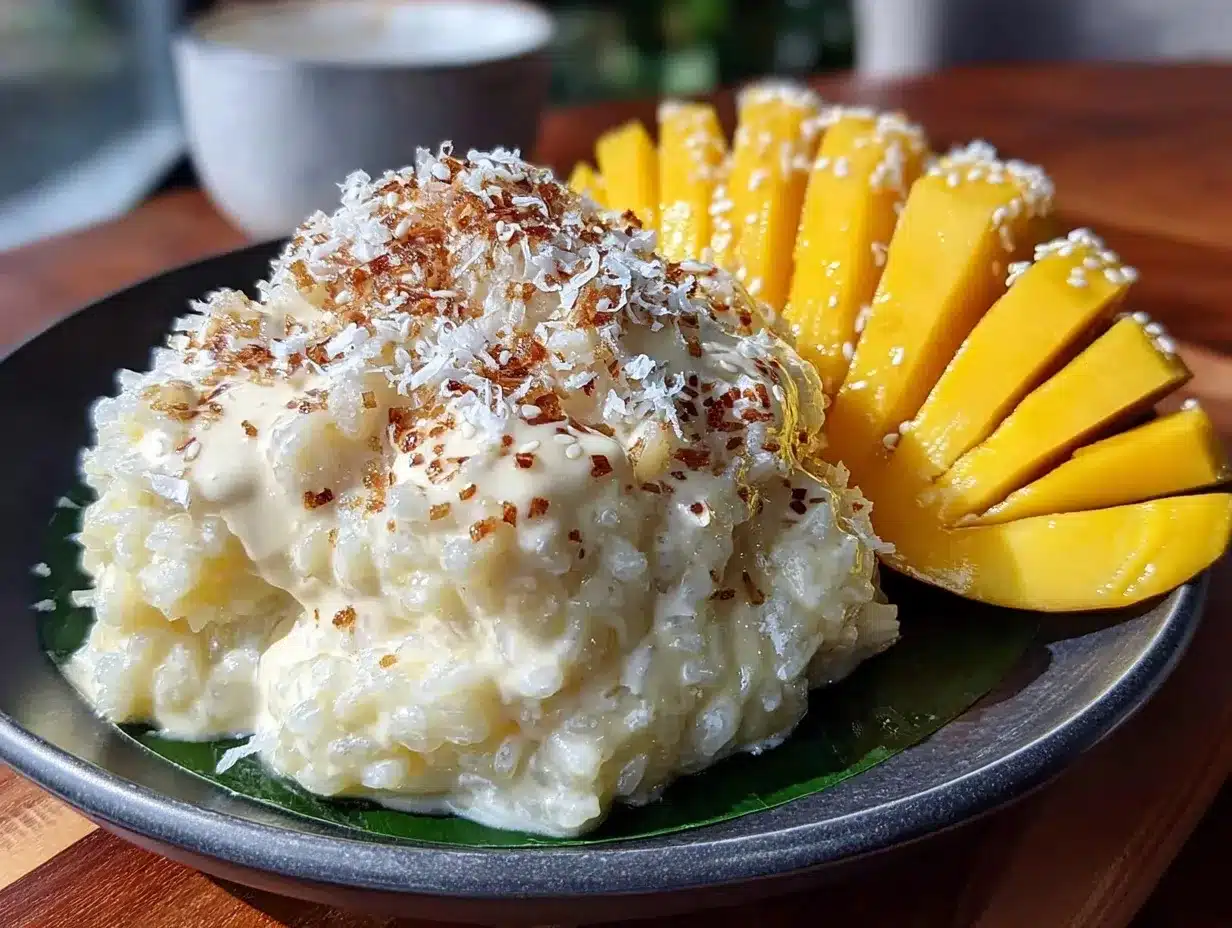
- Coconut Milk: 1 can (400ml). Use full-fat for the best richness. Brands like Aroy-D or Chaokoh are reliable and often on sale.
- Granulated Sugar: 3-4 tablespoons. Adjust based on how sweet your mangoes are. Brown sugar adds a deeper molasses note, but white sugar is traditional.
- Salt: ½ teaspoon. This is crucial. It balances the sweetness and highlights the coconut flavor.
- Cornstarch: 1 teaspoon. This helps thicken the sauce so it coats the rice properly instead of being too runny.
For the Garnish and Serving
- Ripe Mangoes: 2 large mangoes. Choose mangoes that are fragrant and slightly soft but not mushy. Seasonal mangoes are always cheaper and tastier.
- Toasted Sesame Seeds: 1 tablespoon. Adds a nutty crunch and visual appeal.
- Fried Shallots or Mung Beans: Optional. For authentic texture, but sesame seeds are a budget-friendly alternative.
Substitution tip: If you can’t find Thai sticky rice, Japanese mochi rice can work in a pinch, but the texture will be slightly different. For a dairy-free option, this recipe is already vegan as long as you check your sugar isn’t processed with bone char.
Equipment Needed
You don’t need fancy gadgets to make this dessert. In fact, using traditional methods often yields better results. Here is what you need:
- Steamer Basket or Insert: A bamboo steamer is ideal because it allows steam to circulate evenly. If you don’t have one, a metal steamer insert that fits your pot works perfectly. Avoid using a microwave unless you have a specific rice cooker attachment, as it can dry out the rice.
- Saucepan: A small, heavy-bottomed saucepan for heating the coconut milk. This prevents burning and ensures even thickening.
- Small Bowl: For mixing the cornstarch slurry. This prevents lumps in your sauce.
- Serving Plates: Flat plates work best for presentation. You want to be able to arrange the mango slices neatly.
Budget tip: If you are on a tight budget, a simple metal colander placed over a pot of boiling water can act as a makeshift steamer. Just ensure the water level doesn’t touch the rice. The key is consistent steam, not high pressure.
Preparation Method
Making Classic Mango Sticky Rice is a process of patience and precision. Here is how to do it right, step by step.
- Soak the Rice (2-4 hours): Rinse the sticky rice under cold water until the water runs clear. This removes excess starch. Place the rice in a bowl and cover with cold water. Let it soak for at least 2 hours, or overnight if you can. This step is vital for even cooking. If you skip this, the rice will remain hard in the center.
- Steam the Rice (20-25 minutes): Line your steamer basket with a cheesecloth or banana leaf to prevent sticking. Place the soaked rice in the steamer. Make sure the water in the pot below is boiling vigorously. Steam the rice for 20-25 minutes. The rice is done when the grains are translucent and tender but still chewy. If you bite into a grain, it should have a slight resistance, not be crunchy. Avoid stirring the rice while it steams, as this can make it gummy.
- Prepare the Coconut Sauce (10 minutes): While the rice steams, combine the coconut milk, sugar, and salt in a small saucepan over medium-low heat. Whisk until the sugar dissolves. In a small bowl, mix the cornstarch with a tablespoon of cold water to create a slurry. Once the coconut mixture is hot but not boiling, stir in the slurry. Continue to cook, stirring constantly, until the sauce thickens slightly. It should coat the back of a spoon. Remove from heat and set aside. Do not boil vigorously, or the coconut milk might separate.
- Combine Rice and Sauce (5 minutes): Once the rice is steamed, transfer it to a large bowl. Pour about half of the warm coconut sauce over the hot rice. Gently fold the rice to absorb the sauce. Let it sit for 10 minutes. This allows the rice to soak up the flavor. Reserve the rest of the sauce for serving.
- Prepare the Mangoes: Peel the mangoes and slice the flesh away from the pit. Cut the flesh into thin, even slices. You want them to be uniform so they look pretty on the plate. If your mangoes are very tart, you can sprinkle a little sugar on them, but usually, their natural sweetness is enough.
- Assemble and Serve: Arrange the mango slices on a serving plate. Place a mound of the sauced sticky rice next to or on top of the mangoes. Drizzle the remaining coconut sauce over the rice. Sprinkle with toasted sesame seeds. Serve immediately while the rice is still warm.
Troubleshooting tip: If the rice is too hard after steaming, add a splash of water to the pot and steam for another 5-10 minutes. If it’s too wet, spread it out on a plate to cool and let the excess moisture evaporate.
Cooking Tips & Techniques
After making this dish many times, I’ve learned a few tricks that make a big difference. First, always use glutinous short-grain rice. Long-grain rice like Jasmine will not stick together and will not give you the correct texture. It’s a common mistake, but one that’s easy to avoid if you check the label.
Another tip is to taste your mangoes before you buy. If they are sour, you might want to increase the sugar in the coconut sauce slightly. If they are very sweet, reduce the sugar. Balance is key. Also, when heating the coconut milk, keep the heat low. High heat can cause the coconut milk to split, resulting in an oily sauce. Gentle warmth is all you need.
I once tried to bake the rice in the oven to save time, but it came out dry and crumbly. Steaming is the only way to get that authentic chewy texture. Don’t rush this step. And finally, serve the rice warm, not hot. Hot rice can burn your mouth, and the contrast between the warm rice and cool mango is part of the experience.
Variations & Adaptations
While the classic version is hard to beat, there are ways to adapt this recipe to suit your needs or what’s on sale.
- Gluten-Free: This recipe is naturally gluten-free, as sticky rice and coconut milk are gluten-free. Just ensure your soy sauce (if adding a savory element) is tamari.
- Vegan/Dairy-Free: This recipe is already vegan. Just double-check that your sugar is vegan-friendly if that matters to you.
- Flavor Twist: Add a pinch of pandan leaf to the coconut sauce for a fragrant, vanilla-like aroma. You can also add a teaspoon of matcha powder to the coconut milk for a green tea twist.
- Seasonal Fruit: If mangoes are out of season or expensive, try this with strawberries, peaches, or even blueberries. The coconut sauce pairs well with many fruits.
My personal variation involves adding a few crushed peanuts on top for extra crunch and protein. It’s a simple change that makes the dish feel more substantial.
Serving & Storage Suggestions
This dessert is best served immediately after assembly. The rice is warm, and the mango is cool, creating a delightful temperature contrast. You can garnish with extra toasted sesame seeds or a few fresh mint leaves for color.
If you have leftovers, store the rice and sauce separately in airtight containers in the refrigerator for up to 3 days. The rice will harden in the fridge, so you’ll need to reheat it. The best way is to steam it again for a few minutes or microwave it with a splash of water. The sauce can be reheated gently on the stove. Do not freeze the rice, as it will lose its chewy texture upon thawing.
Pair this with a cup of hot green tea or jasmine tea to cut through the richness. It’s a perfect end to a Thai-inspired meal.
Nutritional Information & Benefits
A serving of Classic Mango Sticky Rice is approximately 350-400 calories, depending on the size of the mango and the amount of sauce used. The sticky rice provides carbohydrates for energy, while the coconut milk offers healthy fats. Mangoes are rich in Vitamin C and fiber. While it is a sweet dessert, it’s lighter than many Western cakes. It’s a great option for those looking for a natural sugar source rather than processed sweets.
However, keep in mind that it is high in sugar and calories, so enjoy it in moderation. It’s a treat, not a daily staple. For a lighter version, you can reduce the sugar in the sauce by half and use light coconut milk, though the flavor will be less rich.
Conclusion
Making Classic Mango Sticky Rice at home is easier than you think, and it’s far more rewarding than buying it pre-made. It’s a dish that brings joy, requires minimal effort, and stretches your grocery budget beautifully. I hope you try this recipe and find it as comforting as I do. Don’t be afraid to experiment with the sweetness level or add your own garnishes. Cooking is about making it your own.
If you make this, I’d love to hear how it turned out. Leave a comment below or share a photo on social media. And if you enjoyed this, you might also like trying my crispy garlic chicken for a savory contrast. Happy cooking!
Frequently Asked Questions
Can I use regular Jasmine rice instead of sticky rice?
No, Jasmine rice will not work. It lacks the high amylopectin content that makes sticky rice chewy and clumpy. You need glutinous short-grain rice for the correct texture.
How do I know when the rice is done steaming?
The rice is done when the grains are translucent and tender but still have a slight chew. If you press a grain between your fingers, it should mash easily but not be mushy.
Can I make the coconut sauce ahead of time?
Yes, you can make the sauce up to 3 days in advance. Store it in the fridge and reheat gently before serving. It may thicken when cold, so you might need to add a splash of water when reheating.
What kind of mangoes are best for this recipe?
Nam Dok Mai or Ataulfo (Honey) mangoes are ideal because they are sweet, less fibrous, and have a vibrant yellow color. Any ripe, sweet mango will work, though.
How do I reheat leftover sticky rice?
Steam the rice for 5-10 minutes to restore its moisture and chewiness. You can also microwave it with a damp paper towel over it for 1-2 minutes, but steaming yields better results.
Pin This Recipe!
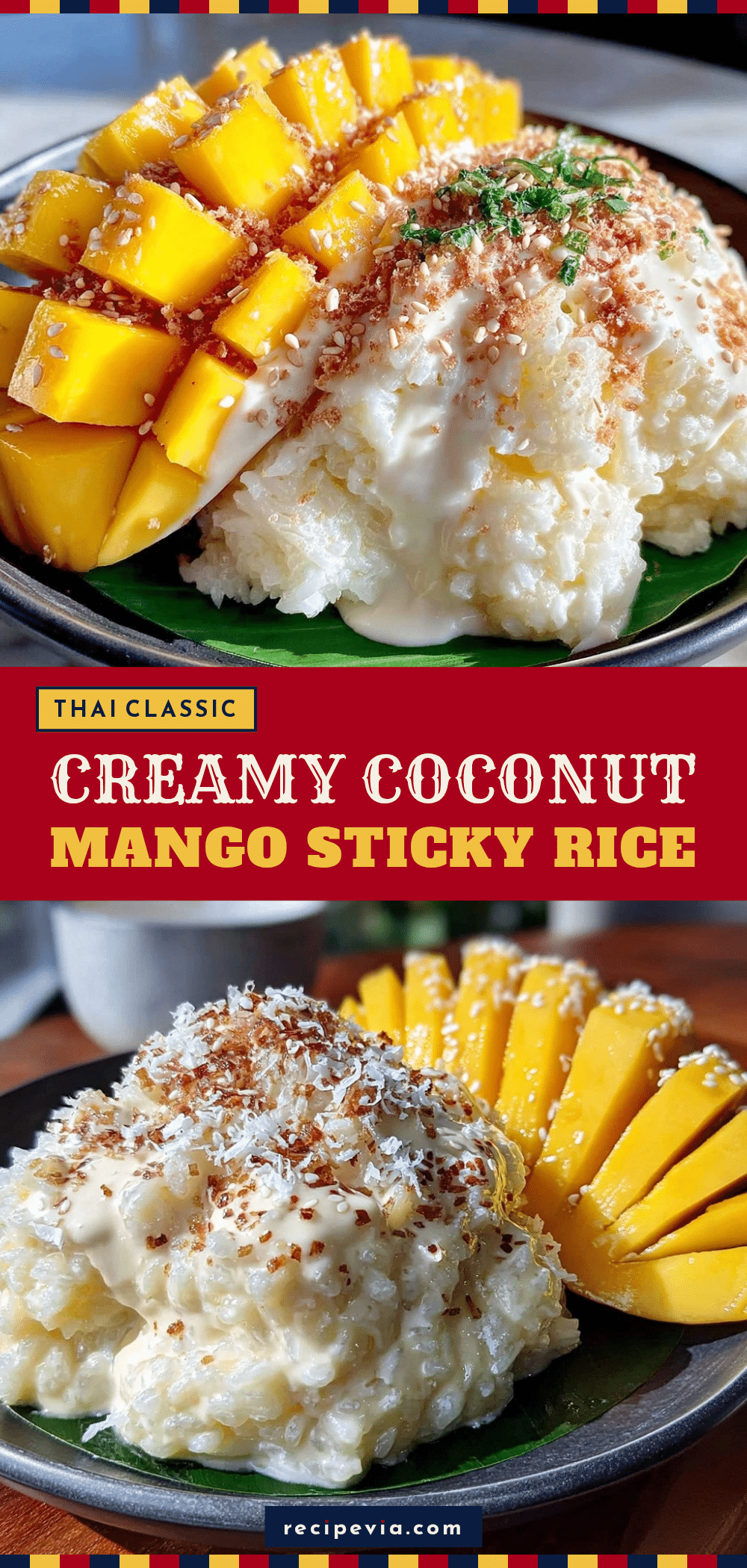

Classic Mango Sticky Rice: Best Budget Thai Dessert
- Total Time: 2 hours 45 minutes
- Yield: 4 servings 1x
Description
A budget-friendly, authentic Thai dessert featuring chewy glutinous rice steamed to perfection and served with a rich, salty-sweet coconut sauce and fresh mangoes.
Ingredients
- 1 cup (200g) Thai Sticky Rice (Glutinous Rice)
- Water for soaking
- 1 can (400ml) full-fat Coconut Milk
- 3–4 tablespoons Granulated Sugar
- 1/2 teaspoon Salt
- 1 teaspoon Cornstarch
- 1 tablespoon cold water (for cornstarch slurry)
- 2 large ripe Mangoes
- 1 tablespoon Toasted Sesame Seeds
- Fried Shallots or Mung Beans (optional)
Instructions
- Rinse the sticky rice under cold water until clear. Soak in cold water for at least 2 hours or overnight.
- Line a steamer basket with cheesecloth or a banana leaf. Place the soaked rice in the steamer over boiling water.
- Steam the rice for 20-25 minutes until grains are translucent and tender but still chewy. Do not stir during steaming.
- While rice steams, combine coconut milk, sugar, and salt in a saucepan over medium-low heat. Whisk until sugar dissolves.
- Mix cornstarch with 1 tablespoon of cold water to create a slurry. Stir the slurry into the hot coconut mixture.
- Cook the sauce, stirring constantly, until it thickens slightly. Remove from heat.
- Transfer steamed rice to a large bowl. Pour half of the warm coconut sauce over the rice and gently fold to combine. Let sit for 10 minutes.
- Peel and slice the mangoes into thin, even slices.
- Arrange mango slices on a plate. Place a mound of sticky rice next to or on top of the mangoes.
- Drizzle with remaining coconut sauce and sprinkle with toasted sesame seeds. Serve immediately while warm.
Notes
Ensure you use glutinous short-grain rice, not Jasmine rice, for the correct texture. If the rice is too hard after steaming, add a splash of water and steam for another 5-10 minutes. Store leftovers separately in the refrigerator for up to 3 days; reheat rice by steaming or microwaving with water. Do not freeze the rice.
- Prep Time: 2 hours 10 minutes
- Cook Time: 35 minutes
- Category: Dessert
- Cuisine: Thai
Nutrition
- Serving Size: 1 serving
- Calories: 375
- Sugar: 35
- Sodium: 250
- Fat: 18
- Saturated Fat: 14
- Carbohydrates: 52
- Fiber: 3
- Protein: 4
Keywords: Thai dessert, mango sticky rice, glutinous rice, coconut milk, budget dessert, vegan dessert, gluten-free dessert, Asian cuisine, easy dessert